Uncategorised
Optimizing e-mail click rates — how to structure a call to action

We regularly help companies with their customer outreach through e-mail, and in the process have become very familiar with different types of e-mail templates and calls to action. Companies often ask us how they can optimize their click rates on e-mails, and today we wanted to share some findings from a recent case study based on e-mail templates and specific types of actions to recommend.
The challenge with designing e-mail templates is a seemingly contradictory set of goals. When sending an e-mail, you want to have a clear and obvious call to action (e.g. purchase a product, make a donation), but to also present it with context so that the reader understands why they are being presented the specific call. In other words, you want to provide context around the call to action to ensure a person has enough information to understand why they are being asked to click, and to actually click through.
Unfortunately, designing e-mail templates can be difficult, and it is often unclear which template is likely to work best. Worse still, not knowing whether the email will be read on a phone, a computer, or another device can cause templating headaches. Forwarding an HTML email can make matters even worse by resizing or changing the content itself.
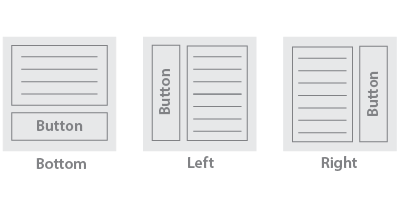
From this perspective, we ran a test with an organization running active e-mail marketing campaigns. We created simple, HTML-friendly templates and split users into three template groups: one with a call to action to the right, (b) one to the left, and (c) one at the bottom. These are illustrated below.
Finding #1: Put calls to action on the left or bottom
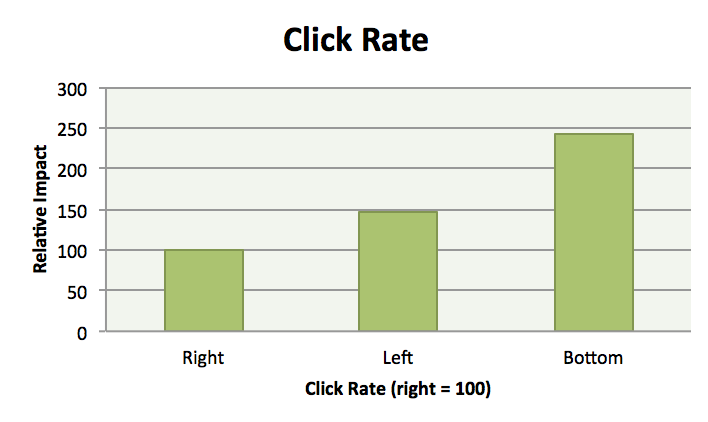
Looking at the three different templates, we notice that the template that performs most poorly is the one with a call to action button on the right. In fact, relative to the most successful call to action (the bottom button), we have a difference of 143%!
Finding #2: Difficult calls to action can do better
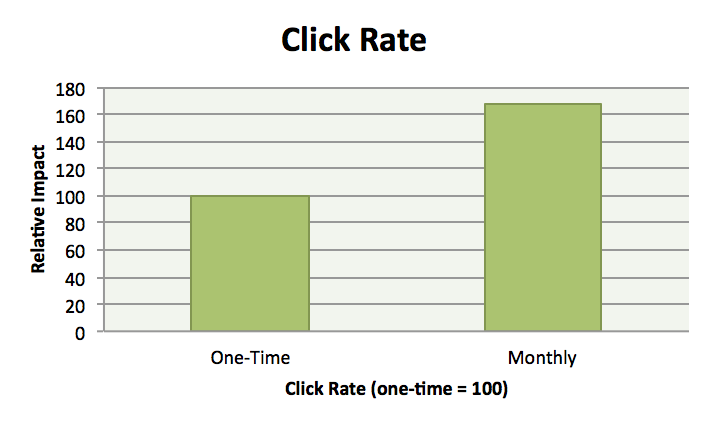
A secondary test – one with a fairly surprising result – is around how onerous the call to action is. In our case, we experimented with two calls to action: a simple request where a user would be charged once, and another case where we encourage them to become a monthly customer for at least 12 months.
Conclusion and caveat
The one caveat to keep in mind is the industry in which this case study was conducted. For this specific case, the business’ customers were extremely loyal and happy with the brand itself, and as such were much more likely to respond positively to the onerous requests and calls to action laid out in the email.
Nonetheless, it is exciting to see how effective A/B testing could be and the large and positive results one could generate. Continuously tweaking customer outreach by testing different approaches is good practice for any company looking to make data-driven decisions and boost engagement.